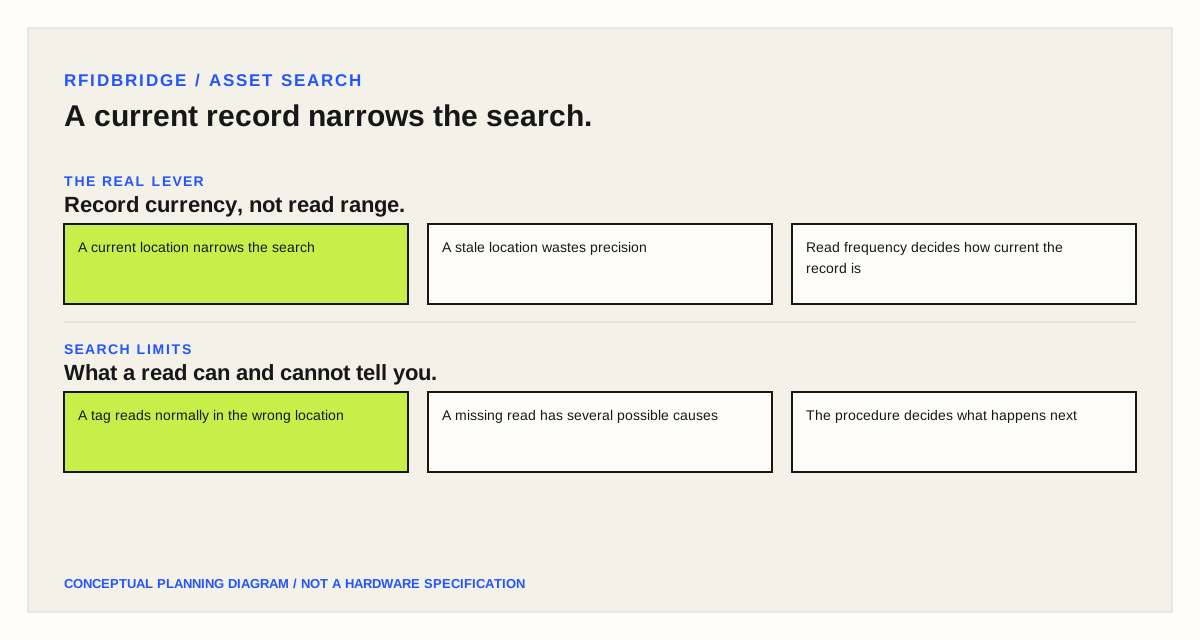
Finding lost equipment is a search problem. It is solved by a location record that is current enough to narrow the search, not by a more sensitive reader.
01 / FIELD NOTE
Keep the decision tied to the operating context.
Equipment goes missing in ordinary ways. It is used somewhere and not returned to where it belongs. It is placed behind something. It is put in a case that is then put somewhere else. None of this is deliberate, and the cost is the time spent looking rather than the item itself.
A search is only efficient when it can be narrowed. If the last known location is a building, the search covers a building; if it is a room, the search covers a room. The value of an asset-tracking workflow is therefore measured by how current its location record is, not by how far its reader can reach. A system with precise locations and a stale record wastes the precision.
This reframes the technology choice. The question is not which reader has the longest range but which read points occur often enough to keep the record useful. A read at the point of issue, a read at the point of return, and a read during a periodic walk-through each update the record at a different frequency. The workflow that reads most often produces the record that makes searching quick, even if each individual read is unremarkable.
A handheld reader adds a search capability that the record alone does not provide. Once the search is narrowed to a plausible area, walking that area with a reader turns a visual search into a read: a tag behind a shelf, inside a case or on a high shelf answers without being visible. That is where radio reading does something a visual check cannot.
The design details that decide whether this works are unglamorous. Tag placement has to be consistent, because a tag on the underside of a case is not read in the same way as one on the front. Assets that are stored in groups need enough separation that a read can distinguish one from another. And the search procedure has to be defined well enough that the record is updated when an asset is found — a search that finds the item but leaves the record unchanged has fixed today's problem and set up the next one.
Two expectations should be set honestly. RFID reports that a tag is present, not that the right asset is in the right place — an asset sitting in the wrong room still reads perfectly. And a missing read is ambiguous: it can mean the asset is absent, the tag is damaged, or the read did not reach it. The system cannot distinguish those cases, so the procedure has to include what happens when a search fails to find something.
02 / THE REAL LEVER
Record currency, not read range.
- A current location narrows the search
- A stale location wastes precision
- Read frequency decides how current the record is
03 / SEARCH LIMITS
What a read can and cannot tell you.
- A tag reads normally in the wrong location
- A missing read has several possible causes
- The procedure decides what happens next
Bring the item, material, movement, target read and system context to a sample or project review.
Request a sample test