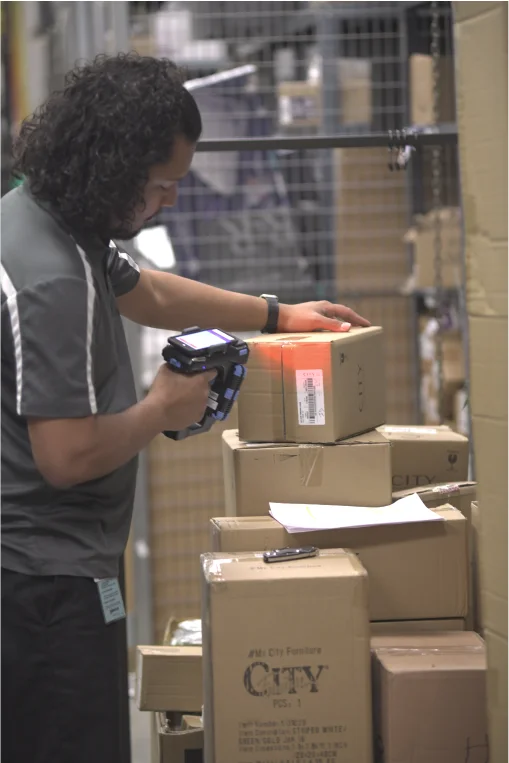
A retail showroom workflow used RFID-enabled labels and handheld checks to change the effort required for recurring inventory counts.
01 / FIELD NOTE
Keep the decision tied to the operating context.
City Furniture needed a more efficient way to count inventory in retail showrooms while keeping item visibility useful for customer-facing operations.
As inventory entered the showrooms, product labels with embedded RFID were attached to the items. The label and item identity formed the basis for recurring inventory checks without requiring an operator to locate and scan every barcode one at a time.
Associates used handheld RFID checks during scheduled cycle counts and could use the same workflow to find a specific item when a customer or operator needed it. The public case description focuses on the count and find workflow; it does not establish a universal result for other stores or item mixes.
The source case reports that a typical showroom count could take up to 46 labor-hours with barcode handling, compared with 12 to 14 labor-hours with RFID. It also records an estimate of 11 labor-hours with continued use. These are reported case figures, not a general promise; representative item, placement, reader and process testing remains required.
02 / CHALLENGE
Make recurring showroom counts practical for a broad item mix.
- Retail showroom inventory visibility
- Recurring cycle-count effort
- Customer-facing item availability
03 / WORKFLOW
Use item identity for counting and item finding.
- RFID-enabled labels on showroom inventory
- Handheld checks during cycle counts
- A find step for a specific item
04 / REPORTED RESULT
The source reports a reduction from up to 46 labor-hours to 12 to 14.
- Reported barcode comparison
- Continued-use estimate of 11 labor-hours
- No universal accuracy or time guarantee
Bring the item, material, movement, target read and system context to a sample or project review.
Request a sample test