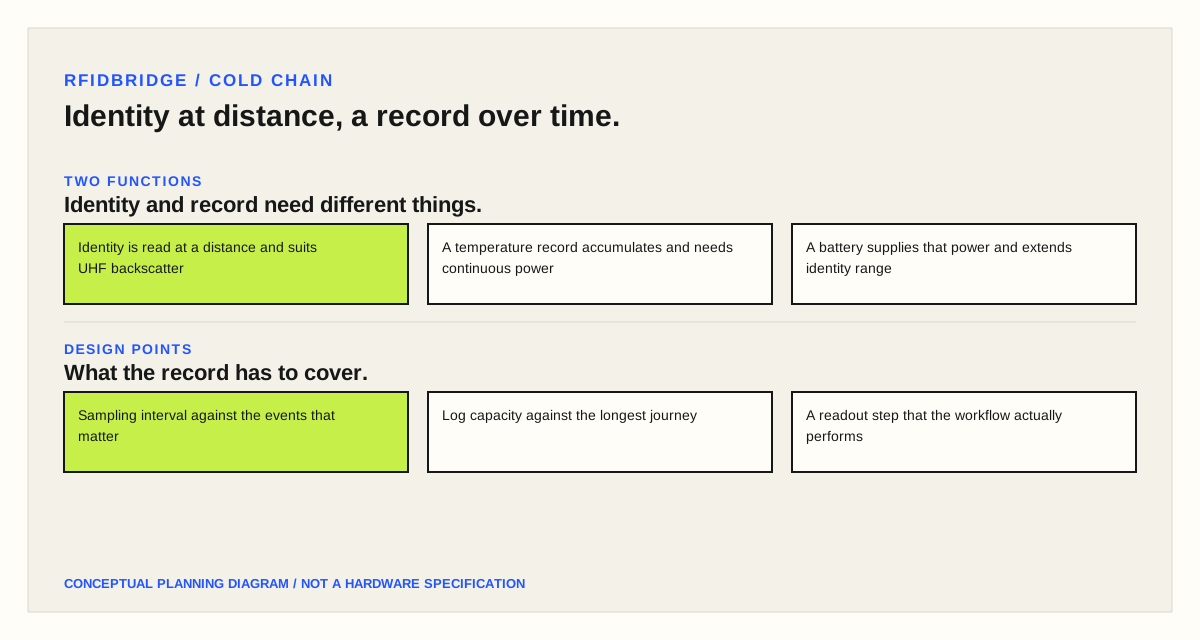
A dual-frequency tag pairs a UHF identity that can be read across a site with a sensing element that logs temperature over time, which is why the two functions use different bands.
01 / FIELD NOTE
Keep the decision tied to the operating context.
A cold chain needs two different things recorded about the same shipment: which consignment it is, and what temperature it experienced between despatch and delivery. A dual-frequency tag is one answer to holding both, because the two jobs have different technical requirements and are served by different bands.
The identity function is served at UHF, where backscatter coupling gives metres of read range. That matters because identity is read at a distance — a pallet passing a dock door, a consignment in a cold store, a handheld check from the aisle without opening the load. The temperature function is different in kind: it is not a single observation but a record that accumulates over the journey, and it needs power available between reads rather than only during the moment a reader is transmitting.
That requirement is what makes the tag battery-assisted rather than purely passive. A passive tag draws power only while it is inside a reader's field, which is a tiny fraction of a shipment's life, so a sensor on a passive tag has nothing to run on while the goods are in transit. A battery supplies the continuous power a logging sensor needs and, because none of the harvested energy has to run the chip, extends the range at which identity can be read.
The second band is what allows the stored record to be retrieved. A logger that holds a temperature history has to be read out, and depending on the design that can happen over a short range at a defined point or through a longer-range interface. The combination means the same physical label carries an identity that the logistics system can read at distance and a record that is read out when the consignment reaches a checkpoint or a destination.
The value of the arrangement is that both facts come from one physical object. If identity and temperature history live on separate devices, the system has to be told that they belong together, which is a step that can be missed at exactly the moment when the shipment changes hands. A single tag carrying both removes that reconciliation.
What the design still has to answer is timing. A temperature log is only useful if the sampling interval matches the events that matter: a slow drift over days and a brief excursion during a transfer are different phenomena, and an interval chosen for one may not capture the other. The log also has a finite capacity, so the recording window has to cover the longest journey the tag is expected to make, not the average one.
The failure modes are worth stating plainly. A battery reaches the end of its life, and a depleted tag is indistinguishable from an absent one — a reader reports nothing in both cases. Low temperature reduces battery performance, so a cold-chain tag is working in the condition least favourable to its power source. And the record can only be read if someone reads it, which makes the readout step part of the workflow rather than an optional extra. A temperature log that nobody retrieves provides no assurance at all.
02 / TWO FUNCTIONS
Identity and record need different things.
- Identity is read at a distance and suits UHF backscatter
- A temperature record accumulates and needs continuous power
- A battery supplies that power and extends identity range
03 / DESIGN POINTS
What the record has to cover.
- Sampling interval against the events that matter
- Log capacity against the longest journey
- A readout step that the workflow actually performs
Bring the item, material, movement, target read and system context to a sample or project review.
Request a sample test