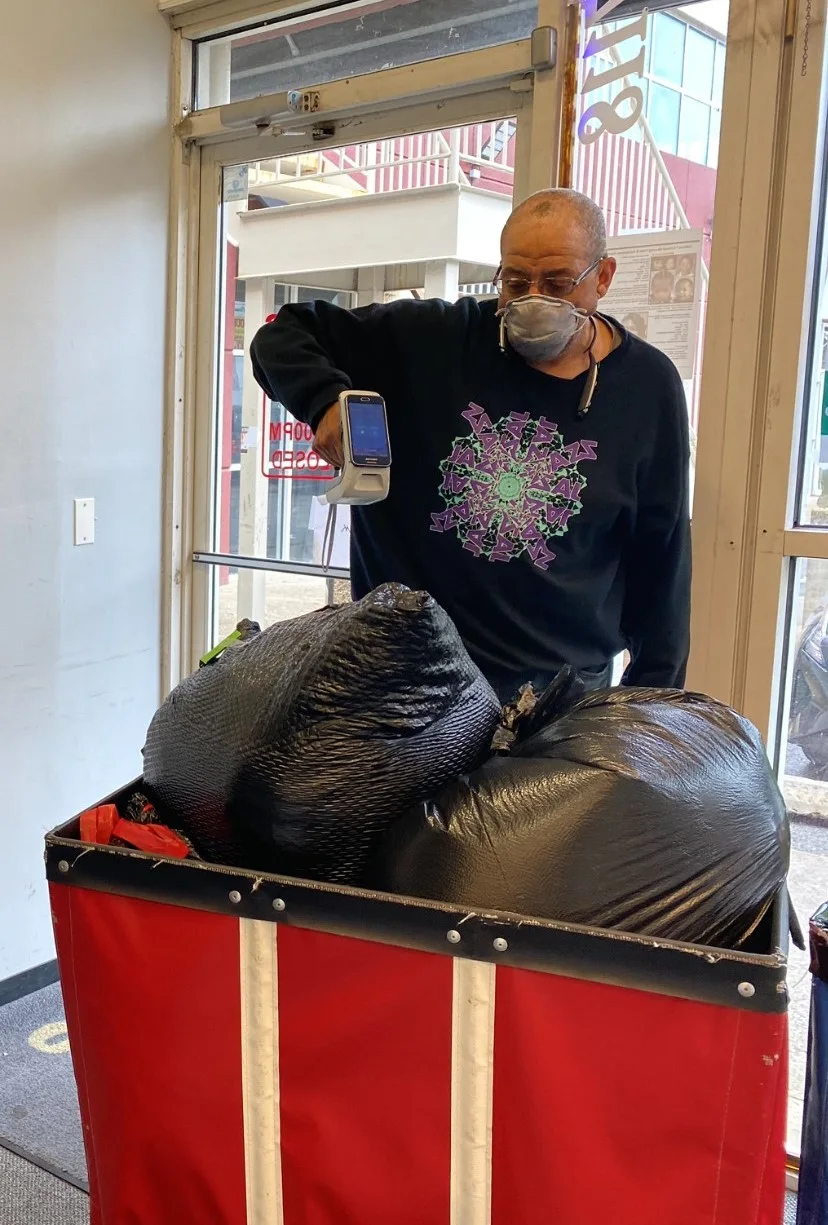
A healthcare-garment laundry workflow used RFID-tagged garments and bag-level scans to compare pickup and return contents.
01 / FIELD NOTE
Keep the decision tied to the operating context.
Kimbark Laundry & Dry Cleaning needed a practical way to manage healthcare scrubs and other garments moving from customer pickup through processing and back to the customer.
The source case describes RFID laundry tags attached to garments, with each tag linked to information such as garment type, color, size, owner and department. This gave the workflow an item identity without requiring every garment to be handled and counted individually.
At pickup, a bag-level RFID scan created an inventory of the contents. A second scan was taken before return, and the incoming and outgoing records were compared so that a discrepancy report could be generated when an item was missing. Handheld checks also supported inventory verification and finding a specific garment.
The source case reports that a typical pickup or return could take up to 45 minutes with barcode handling, compared with a few seconds with RFID. This is a reported case result, not a universal timing or safety guarantee; garment construction, tag attachment, bag density, reader setup and operating procedure must be tested in the target workflow.
02 / CHALLENGE
Account for garments as they move through pickup and return.
- Healthcare scrubs and reusable garments
- Bag-level pickup and return handoffs
- A clear path for discrepancies
03 / WORKFLOW
Compare item identities across the two handoffs.
- RFID tags attached to garments
- A scan at pickup and another at return
- Discrepancy review and item finding
04 / REPORTED RESULT
The source reports a change from up to 45 minutes to a few seconds.
- Reported barcode comparison
- No universal timing guarantee
- Representative garment and bag testing remains required
Bring the item, material, movement, target read and system context to a sample or project review.
Request a sample test