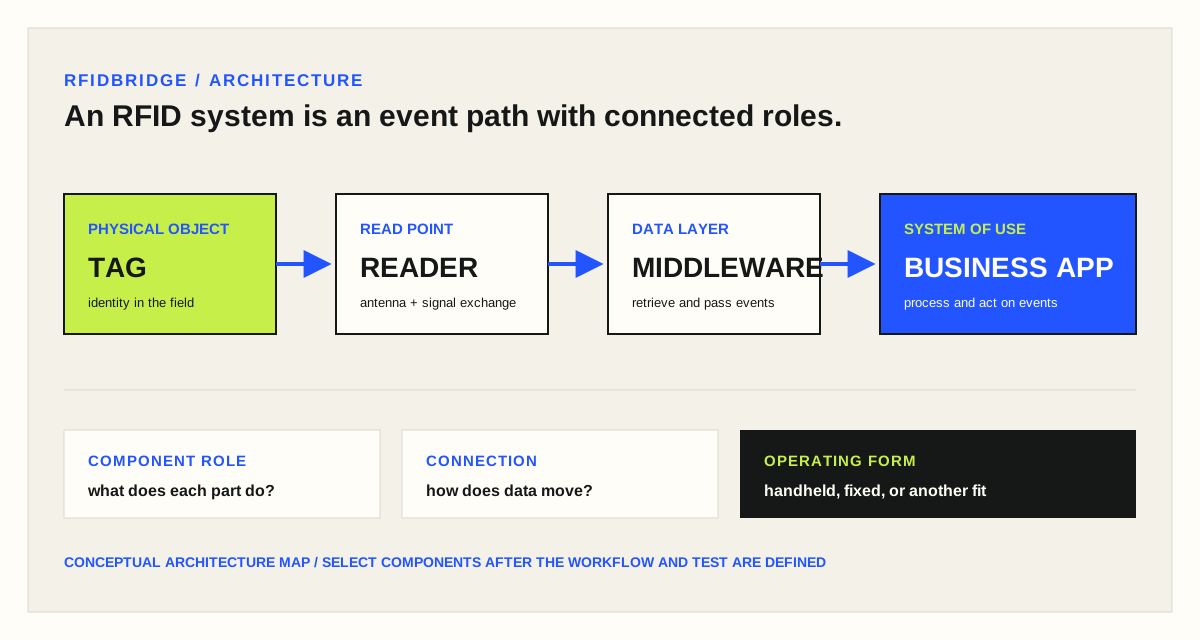
Map tags, readers, antennas, cables and middleware before deciding how RFID data will reach the system that uses it.
01 / FIELD NOTE
Keep the decision tied to the operating context.
RFID systems are composed of a set of key system components:
• Reader (also known as an Interrogator)
• One or more reader antennas
• Cable to connect reader antennas to the reader (unless the antenna is integrated into the reader)
• Tags that are placed on or in an object
• A software application to transfer data from the reader to the system that will process the data, usually referred to as the “middleware”
• How each of these components is connected to one or more of the other components.
• What role each component plays in the overall RFID system
• What physical forms the components may take (for example handheld versus fixed readers)
• How Peer to Peer or Mesh RFID systems work
• How data is transferred between components
• Signal or data exchange protocols
02 / COMPONENTS
Keep the physical and data layers visible together.
- Tag and tagged object
- Reader, antenna and cable
- Middleware and the system that processes data
03 / ARCHITECTURE QUESTIONS
Review the role, connection and exchange of every part.
- What role does each component play?
- How are the components connected?
- How does data move between them?
Bring the item, material, movement, target read and system context to a sample or project review.
Request a sample test