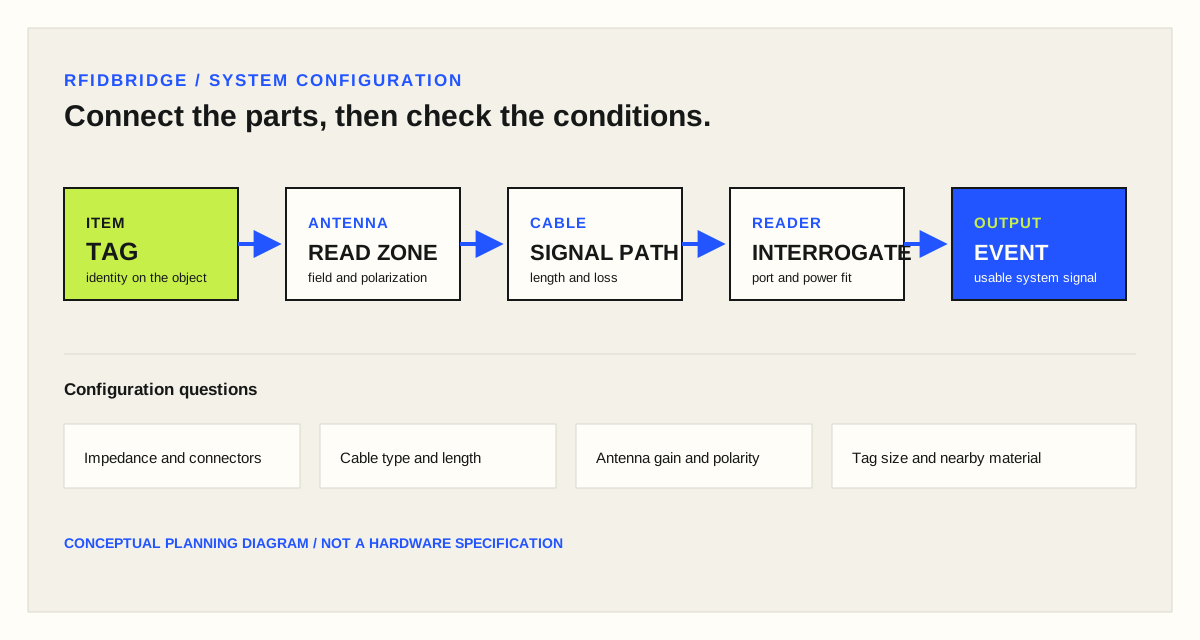
Configure the reader, antenna, cable and tag as one system before relying on the resulting read event.
01 / FIELD NOTE
Keep the decision tied to the operating context.
An RFID system has many components which global standards have helped ensure can work together. However, simply connecting the components together does not mean that the system will work effectively – the components must be configured to work together.
As an example, although it may be possible to physically connect an antenna to a reader antenna port, if the antenna is not of the correct impedance to match that of the reader’s antenna port, then the system may not function properly or may even be damaged.
Many countries also impose a specific limit on the amount of power that may be transmitted from the antenna. The power transmitted is not simply that output by the reader but is a result of the influence of many components within the system, which is why it is important to know how to configure the system overall to work in unison. What are the components of a RFID system:
• Reader
• Cable
• Connectors
• Antenna
• Hub (not always present)
• Multiplexor (not always present)
What are the configuration factors that impact overall system effectiveness:
• Reader port impedance
• Connector type/materials
• Cable type & signal loss
• Cable length
• Reader antenna polarization
• Reader antenna gain
• Tag antenna size
• Material tag is placed on or near
• Tag processor type (“chip”)
What is required is knowledge of what factors must be taken into account in configuring an RFID system rather than detailed knowledge of how to do that.
• Specification of any specific reader, antenna or tag
• Connector types or materials
• What the different types of antenna cables are
• How to calculate power transmitted at the antenna
• Details of any tag chip type
02 / SYSTEM PATH
Five points connect the physical item to a usable event.
- Item and tag identity
- Antenna and read zone
- Cable, reader and output event
03 / CONFIGURATION
Conditions that can change the result.
- Impedance and connectors
- Cable type, length and signal loss
- Antenna polarization, gain and nearby material
Bring the item, material, movement, target read and system context to a sample or project review.
Request a sample test