Physical movement
Capture the actual dock geometry, rack layout, staging practice and operator route rather than an idealized process.
SOLUTIONS / WAREHOUSE / APPLICATION
Make warehouse receiving, storage, transfer and count events reviewable by defining the item hierarchy, read boundary and WMS exception handoff first.
01 / THE OPERATING DECISION
A warehouse workflow has more than one movement near a reader. The value is not a raw observation but a confirmed event that a warehouse team can connect to a receipt, location, transfer or count decision.
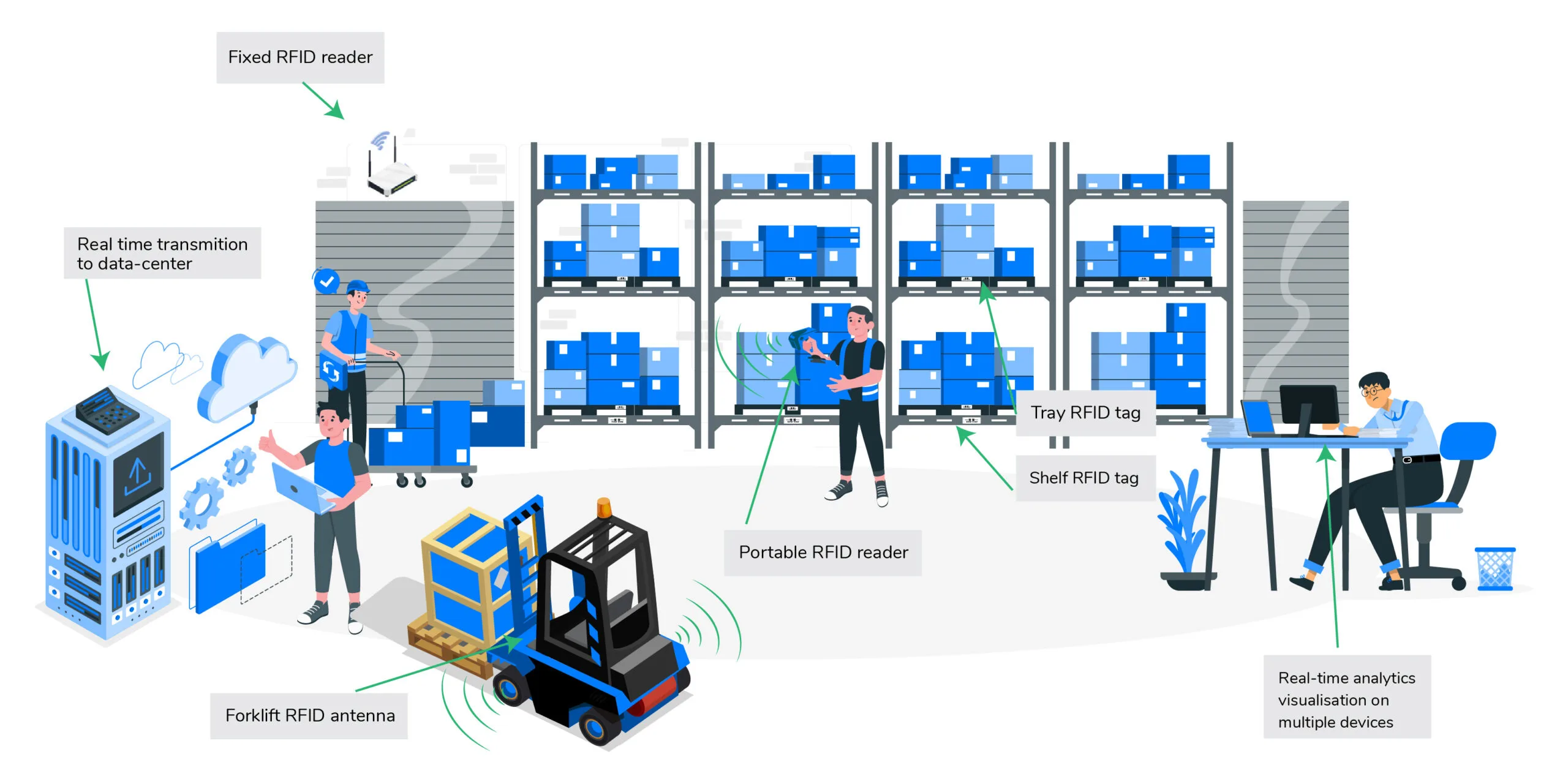
FIELD VIEW / ILLUSTRATIVE CONTEXT
The visual grounds the operating setting. It is not evidence of a customer installation, product configuration, measured result or readiness for this workflow.
Open the parent Solution02 / EVENT WORKFLOW
Use the workflow map to distinguish a physical observation from the business event, exception and handoff that give it operational meaning.
Describe the physical movement and the WMS decision it should support before a reader layout is considered.
Define whether an item is arriving, leaving, transferring or being counted, including the evidence for that decision.
Route mixed loads, missing records and incidental observations to a person or system path that can resolve them.
Freeze the accepted item, zone and exception design before applying it to another dock or warehouse area.
03 / OPERATING SCOPE
These facts are the design inputs that keep an identity observation tied to an operating decision instead of an unexplained signal.
04 / FIRST REVIEW
Each review item is a decision to make with representative items, real operators and the systems that will receive the event.
Capture the actual dock geometry, rack layout, staging practice and operator route rather than an idealized process.
Agree the identity, location, direction, timestamp and exception state required by the receiving system.
Name the owner and action for a movement that is incomplete, unexpected or observed at the wrong boundary.
05 / VALIDATION PLAN
The first validation is a bounded proof of the operating rule, exception process and evidence trail. It is not a promise about later performance in a different environment.
Include the item and packaging variation that the warehouse will actually receive and move.
Test nearby activity, staging dwell, repeat movement and failed observations around the intended zone.
Confirm how a held event, correction or fallback reaches the warehouse record without hidden manual work.
RFIDBRIDGE / APPLICATION REVIEW
Use this field brief to frame representative items, the event boundary and the system record that needs to receive a reviewable result.
Request a sample test