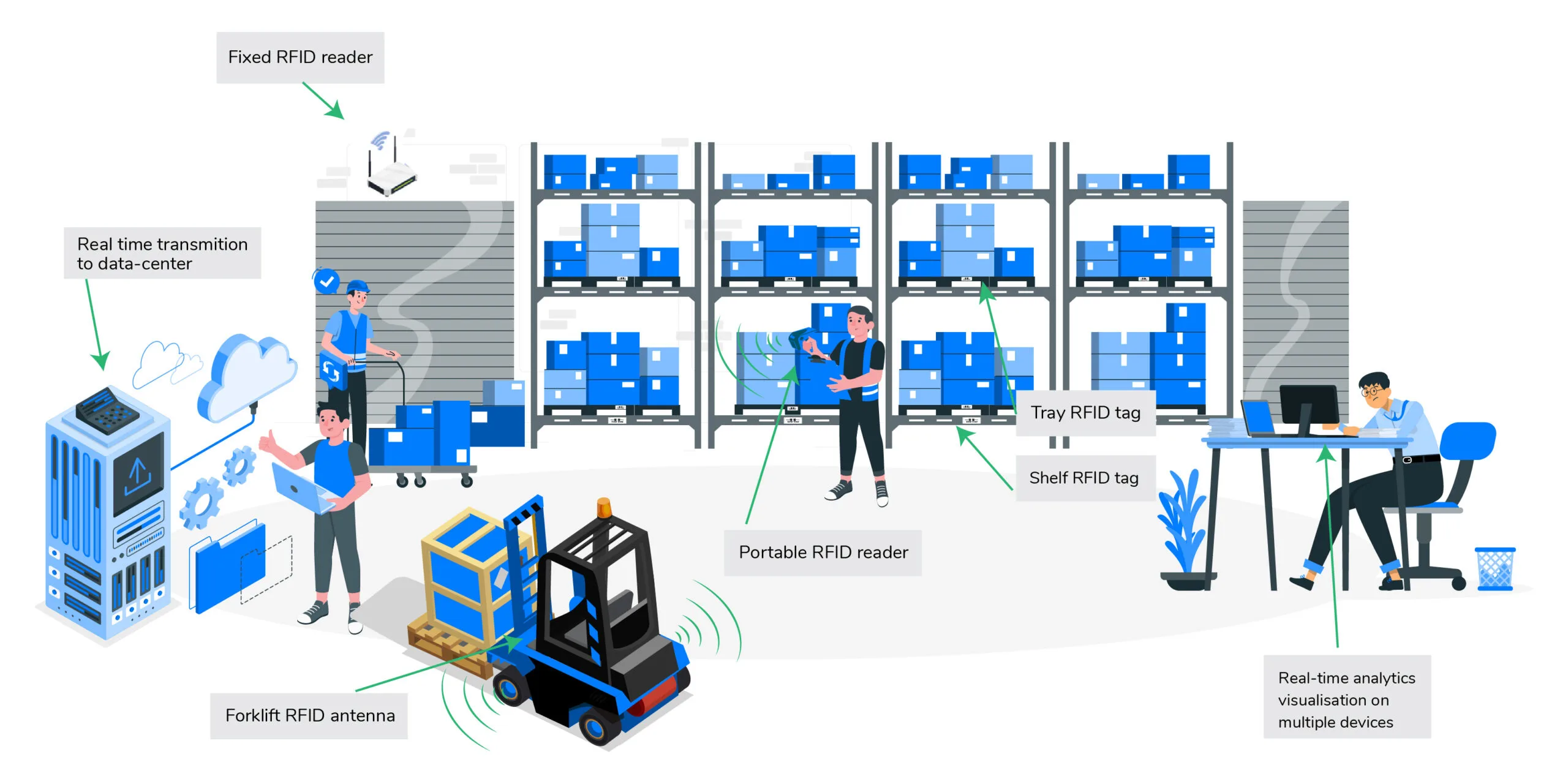
A dependable RFID system is a chain of physical and software decisions. Map the chain before comparing individual devices.
01 / FIELD NOTE
Tag and attachment
Choose the item identity, tag construction and attachment method together. Surface, curvature, liquid, metal, abrasion and replacement practice shape the choice.
02 / FIELD NOTE
Reader and antenna
Select a handheld, desktop or fixed reader according to how the operator or item moves. Fixed zones also require antenna position, trigger behavior and power tuning.
03 / FIELD NOTE
Define the observation boundary
Record where an observation is meaningful, which movement or operator action starts it and which nearby activity must be excluded. A component diagram does not define the operating boundary by itself.
04 / FIELD NOTE
Event processing
Filter repeated reads, associate a location or trigger, validate expected states and route exceptions before the event reaches a business system.
05 / FIELD NOTE
System ownership
Define which system owns the item record, inventory status, location, work order or handover. Integration is easier when each field and failure path has an owner.
06 / FIELD NOTE
Verify the complete chain
Test tag placement, reader behavior, event rules, integration responses, operator recovery and configuration changes together. Retain the selected architecture and acceptance evidence as one supportable baseline.
Bring your material, movement, target read and system context to a sample or quote request.
Numune iste